
Home Workout Plans: Effective No-Equipment Exercises for Busy People
Discover how home workout plans using no-equipment exercises help busy people build strength, burn fat, and stay fit with simple, time-efficient routines you can do anytime.
BLOG ARTICLE
12/28/20254 min read
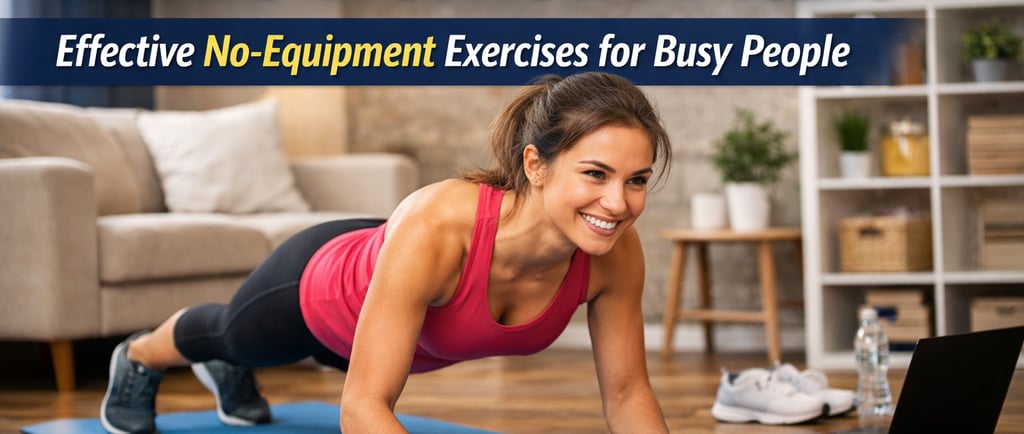
Home Workout Plans: Effective No-Equipment Exercises for Busy People
In today’s fast-paced world, finding time for fitness can feel like a challenge. Long work hours, family responsibilities, and daily stress often push exercise to the bottom of the priority list. However, staying active does not require a gym membership, expensive equipment, or hours of free time. In fact, home workout plans using no equipment are one of the most effective and practical ways for busy people to stay fit, lose weight, and improve overall health.
This guide explores how home workouts work, why they are effective, and how you can structure a realistic exercise routine that fits into even the busiest schedule.
Why Home Workouts Are Ideal for Busy People
Home workouts remove many of the common barriers to exercise. There is no need to commute to a gym, wait for equipment, or follow rigid class schedules. You can work out at any time of the day, whether it’s early in the morning, during a lunch break, or late at night.
Exercising at home also reduces mental resistance. When workouts are simple and accessible, consistency improves. Over time, this consistency leads to better fitness results than occasional long gym sessions.
How No-Equipment Exercises Build Strength and Burn Fat
No-equipment exercises rely on your own body weight to create resistance. Movements such as squatting, pushing, pulling, and stabilizing engage multiple muscle groups at once. This not only builds functional strength but also increases calorie burn.
Because bodyweight workouts activate large muscle groups, they raise heart rate and stimulate metabolism. When performed regularly, these exercises improve muscle tone, cardiovascular health, and fat loss—without stressing joints or requiring machines.
Full-Body Bodyweight Training at Home
A well-designed home workout targets the entire body rather than isolating individual muscles. Full-body training ensures balanced strength development and maximizes results in minimal time.
Lower-body movements such as squats and lunges strengthen the legs and glutes while improving mobility. Upper-body exercises like push-ups develop the chest, shoulders, and arms using natural movement patterns. Core-focused movements stabilize the spine, improve posture, and support daily activities.
When these exercises are combined into a single routine, the body works as a unit, leading to improved coordination and overall fitness.
Short Workouts That Deliver Real Results
One of the biggest misconceptions about fitness is that workouts must be long to be effective. In reality, short, focused workouts can produce excellent results when done consistently.
A 20–30 minute home workout that includes strength and light cardio can elevate heart rate, stimulate muscle growth, and burn calories efficiently. These shorter sessions are easier to stick to, especially for people with limited time.
Over weeks and months, these manageable workouts accumulate into significant improvements in strength, endurance, and body composition.
Improving Cardiovascular Fitness Without Equipment
Cardio does not require treadmills or stationary bikes. At home, dynamic bodyweight movements can effectively improve heart and lung health.
Exercises that involve continuous movement—such as fast-paced squats, controlled jumping movements, or active transitions between exercises—keep the heart rate elevated. This improves stamina, supports fat loss, and enhances overall energy levels.
For busy individuals, combining cardio and strength in the same workout saves time while delivering balanced fitness benefits.
Building a Sustainable Weekly Home Workout Routine
The most effective workout plan is one you can maintain long term. For busy people, sustainability matters more than intensity.
A realistic weekly plan might include three to four home workouts spread across the week, with rest or light activity on other days. These sessions can alternate between full-body strength, mobility-focused workouts, and light cardio-based routines.
Spacing workouts throughout the week allows the body to recover while keeping activity levels consistent. This approach reduces injury risk and prevents burnout.
The Importance of Recovery and Rest
Recovery is an essential part of any fitness routine, especially when balancing exercise with a busy lifestyle. Muscles grow stronger during rest, not during workouts.
At-home routines naturally encourage better recovery because they are less physically demanding than heavy gym training. Gentle stretching, proper sleep, and hydration support muscle repair and help maintain motivation.
Listening to your body and allowing rest days improves long-term results and overall well-being.
Staying Motivated When Exercising at Home
One challenge of home workouts is maintaining motivation without external structure. Setting simple goals, tracking progress, and establishing a regular workout time can help build consistency.
Creating a dedicated workout space—even a small area—signals your brain that it’s time to exercise. Over time, this routine becomes a habit, making workouts feel like a natural part of your day rather than a chore.
Common Mistakes to Avoid With Home Workouts
Many people try to do too much too soon. Overtraining, skipping warm-ups, or exercising with poor form can slow progress and increase injury risk.
Focusing on proper movement, gradual progression, and consistency leads to better outcomes than pushing intensity without preparation. Quality always matters more than quantity.
Long-Term Benefits of No-Equipment Home Workouts
When practiced consistently, home workouts improve strength, mobility, posture, and energy levels. They also reduce stress, improve mental clarity, and support weight management.
Perhaps most importantly, they promote independence. You are no longer dependent on gyms, equipment, or schedules to stay healthy. Fitness becomes something you can maintain anywhere, at any stage of life.
Final Thoughts: Fitness That Fits Your Life
Home workout plans using no equipment are not a compromise—they are a smart solution for busy people. They offer flexibility, effectiveness, and sustainability without sacrificing results.
By committing to regular movement, even in short sessions, you can build strength, burn fat, and improve overall health from the comfort of your home. The key is consistency, patience, and choosing a routine that truly fits your lifestyle.
Start where you are, use what you have, and make fitness work for you.
© 2025. All rights reserved.